SERVICE
Digital Validation
We rethink validation processes
Ensuring quality, safety and efficiency
There are many things that are associated with the validation of IT systems in the regulated sector. Agility, modern tool support or little administrative effort are not among them. Validation often starts where software development ends. Results cannot be used immediately because they are not available in the right format or because specifications and tests cannot be tracked automatically.
We transform your validation processes: digitally, integrated and continuously. We take the entire product life cycle into account with the help of lean principles and agile working methods. From the planning phase, through analysis and design, implementation, automated tests and deployment to release, we think about the process digitally - including risk management as a central core element.
Digital Validation
Digital transformation of validation processes for IT systems, taking into account lean principles and agile working methods.

Advantages of digital validation
thanks to automated, traceable processes
Improved quality
Increased efficiency and traceability
Closer cooperation
Our offer
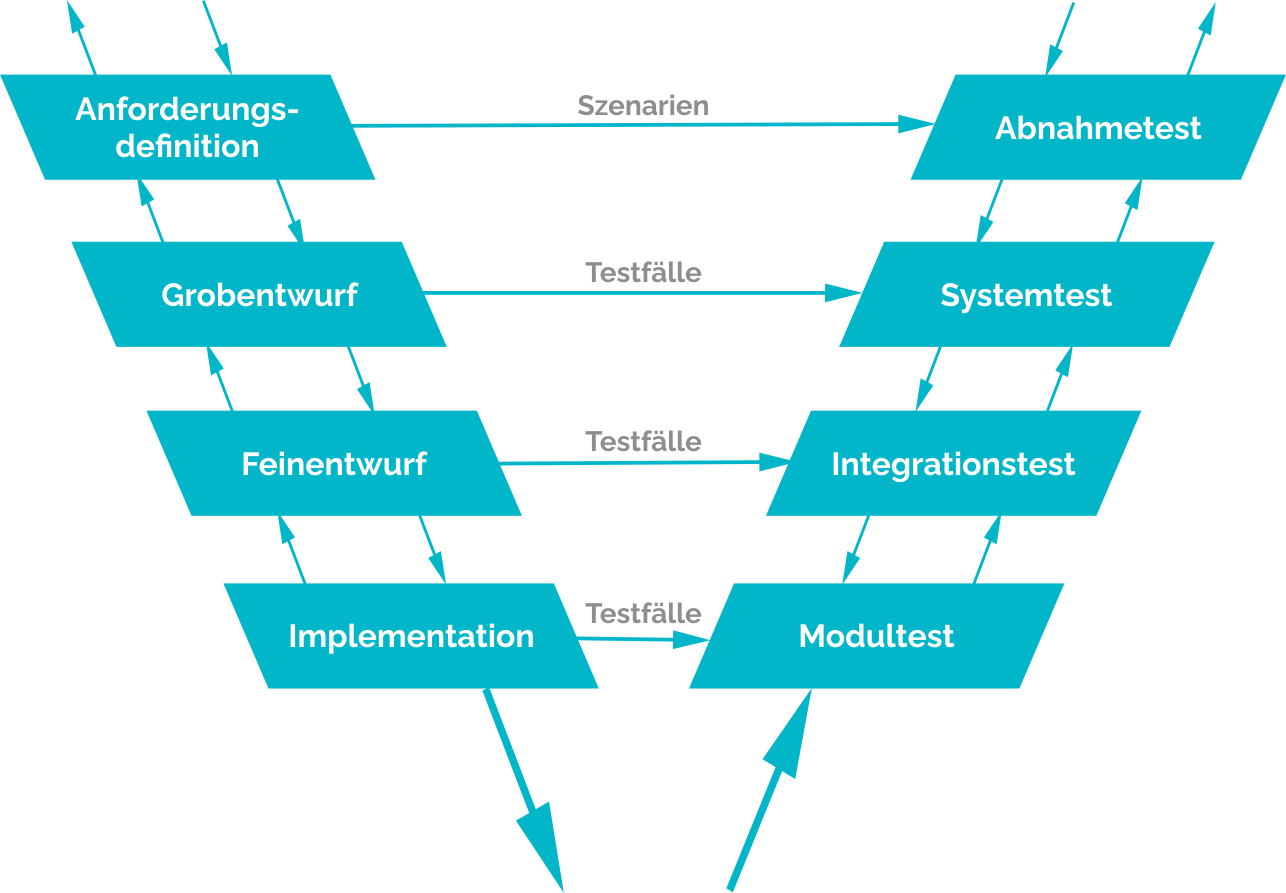
The Digital V is flexible, adaptive and quality-conscious.
Transfer your specifications, tests and other validation results successively from documents to data records and rely on the security of your established processes as well as the predictability and efficient execution of validation for standard applications.
Extra work was yesterday, the future is digital
We advise you on carrying out an analysis of the current situation and use the fit-gap result to model the target processes that are right for you and your company. Based on this, we carry out a market analysis for you in order to design a suitable toolchain. We also support you in the evaluation of selected suppliers. Of course, we also take into account tools already used in the company, if desired and GxP-compatible. We assist with the implementation and configuration of your tools, as well as the basic configuration and the implementation of extended features of the designed toolchain.
In addition to the technical implementation of the digital validation process and the migration of your existing electronic document management system to the toolchain, we also create the necessary validation and qualification documentation.
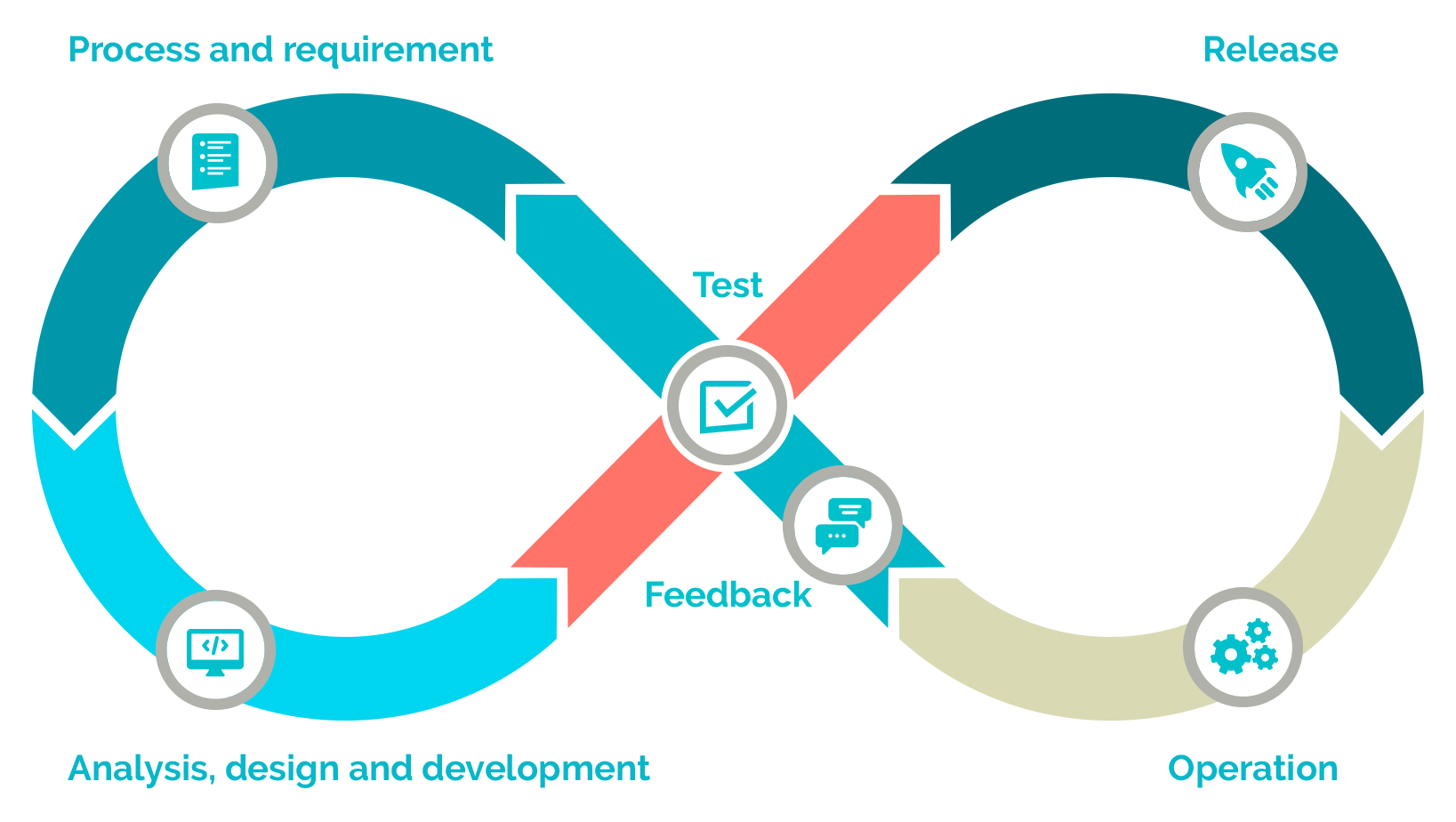
This is how digital validation works!
What happens in the individual phases?
-
Process & requirement
Together with the specialist department, the processes are analyzed and translated into smart requirements (SMART = specific, measurable, accepted, realistic, scheduled). These are prioritized in the backlog according to their urgency.
-
Analysis, design & development
The team analyzes the software design requirements and implements them immediately as part of the sprint. Automatic build & deployment and centralized risk management ensure the integrity of the data and code and avoid redundancy.
-
Test
Tests are a central component of the pipeline and ensure the high quality of the application with a maximum degree of automated regression tests. The specialist department can focus on testing the business process.
-
Release
All documentation artifacts are generated and approved in a legally compliant manner. Traceability between specification levels and tests is guaranteed. Release notes can be generated automatically in the process.
-
Operation
Fast release cycles are possible thanks to an integrated toolchain, and there is no media discontinuity between requirements, code management and operational documentation.
-
Feedback
Regular feedback rounds from the team as part of daily stand-ups, weekly or bi-weekly review and retrospective meetings enable a continuous improvement process. This can effectively increase the quality of the application and collaboration.
Legal certainty in the process chain
In the projects, our consultants work with QA, specialist and IT departments to ensure that there are no breaks in the process chain and that all results are available for validation in a transparent, sustainable and inspection-proof manner. Digitally generated documentation artefacts can be prioritized, expanded and implemented in an agile manner - and at the same time approved in a legally compliant manner. This reduces duplication of work and simplifies traceability with the positive effect that requirements can be approved with legal certainty and made available more flexibly.
Transferring existing documents to an electronic document management system with electronic signatures merely moves the "paper" from the desk to the IT system. Nothing changes in the process itself.